All About Ground Anchors

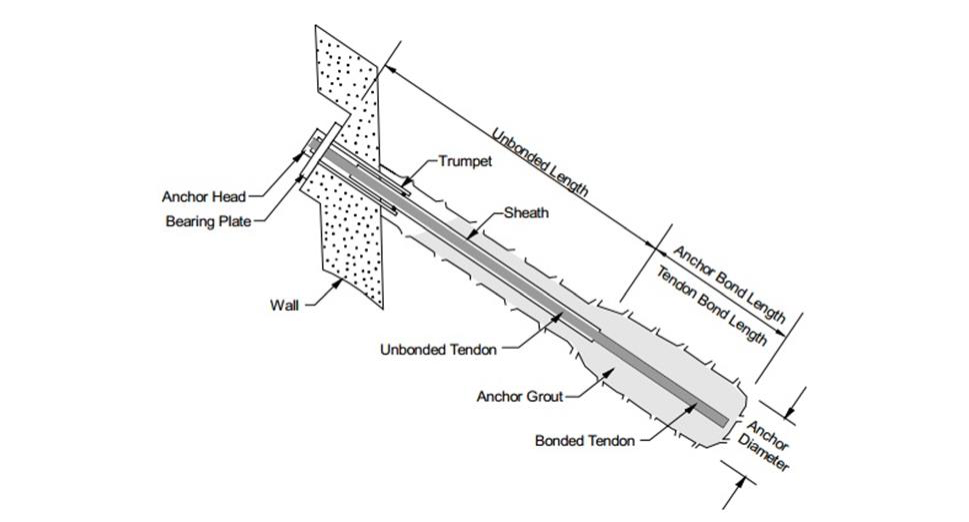
Figure 1. Components of a ground anchor.

Another ground anchor component is the unbonded length, which is free to elongate and transfer the resisting force from the bond length to the front cladding wall. Based on stressing, there are active and passive anchors. Active anchors are prestressed in which tensile force is transferred through the free length. Passive anchors, in which the tensile force developed after the ground deformation. A bond breaker is a smooth plastic sleeve that is placed over the tendon in the unbonded length to prevent the prestressing steel from bonding to the surrounding grout. The bond breaker’s main purpose in the prestressing steel is the unbonded length is free to elongate if it during testing, stressing, and after lock-off. The anchor’s main component is tendon bond length bonded to the grout and capable of transmitting the applied tensile load into the ground. The anchor bond length should be located behind the critical failure surface ground.

Tendon is the main portion on the assembling of the ground anchor. The tendon includes the prestressing steel element (strands or bars), corrosion protection, sheaths (also referred to as sheathings), centralizers, and spacers. The sheath is a smooth or corrugated pipe or tube that protects the prestressing steel in the unbonded length from corrosion. Centralizers position the tendon in the drill hole such that the specified minimum grout cover is achieved around the tendon. For multiple element tendons, spacers are used to separate the strands or bars of the tendons so that each element is adequately bonded to the anchor grout. The grout is of various mix proportions. Minimum M25 grade should be used that provides load transfer from the tendon to the ground and provides corrosion protection for the tendon.

Types of Ground Anchors 

  • Straight shaft gravity-grouted anchors

This type anchors mostly suitable in rock strata and very stiff to hard cohesive soil deposits using either rotary drilling or hollow-stem auger methods. Tremie (gravity displacement) methods are used for grouting the anchor in a straight shaft borehole.

  • Straight shaft pressure-grouted anchors

This type of anchor is most suitable for weak rock strata and coarse granular soils. This anchor type is also used in fine-grained cohesionless soils. In that grout is injected into the bond zone under pressures greater than 0.35 MPa.

  • Post-grouted anchors

Post-grouted anchors use delayed multiple grout injections to enlarge the grout body of straight shafted gravity grouted anchors.

  • Under reamed anchors

Under reamed anchors consist of tremie grouted boreholes that include a series of enlargement underarms. This type of anchor may be used in a firm to hard cohesive deposits.
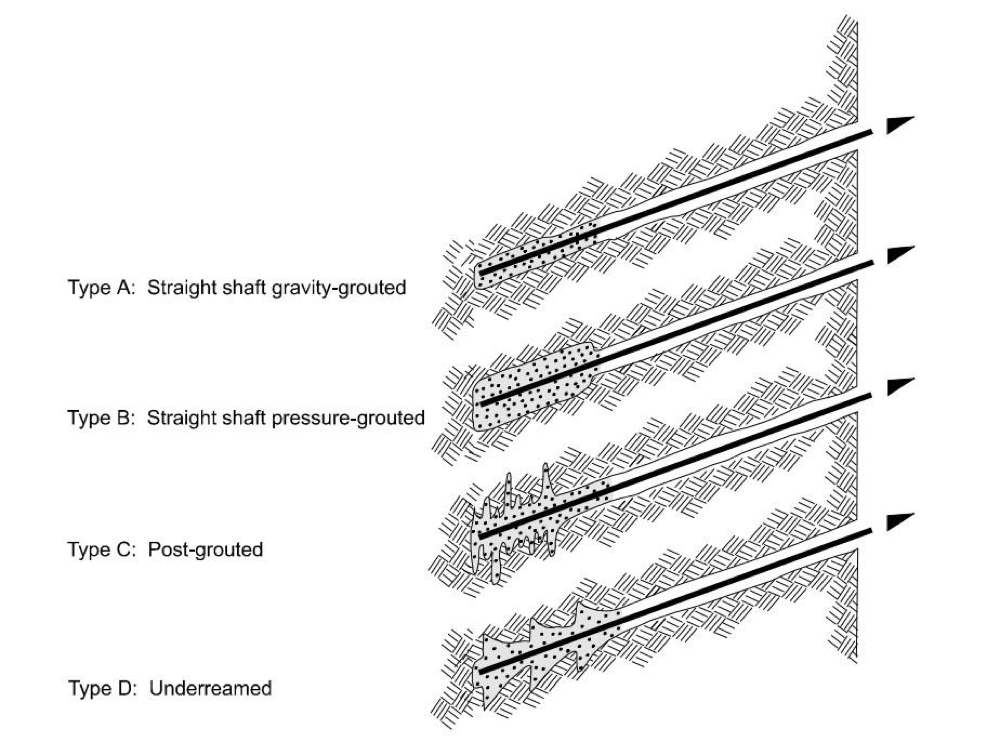
Figure 2: Different types of ground anchors

Applications 

  • Use of Anchors to Improve Slope Stability
  • Applications for Dam Strengthening and Restoration
  • Anchorages for Concentrated Forces
  • Anchorages to Secure Caverns
  • Anchorages for Tunnels
  • Anchorages for Underpinning
  • Anchorages for Deep Excavations
  • Anchorages for Long Excavations
  • Anchoring of Foundation Structures
  • Waterfront Installations and Offshore Structures
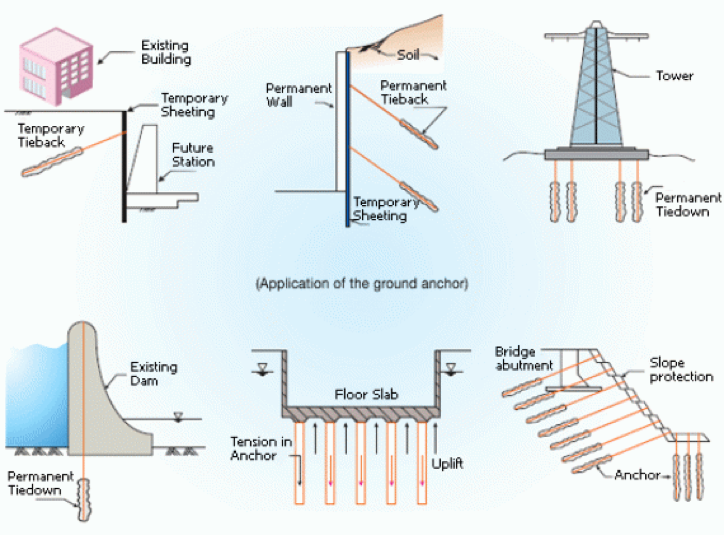
Figure 3: Applications of ground anchors

Anchor Load Testing 

As compared to other structural members, there is a unique aspect of anchors, is that every anchor is load tested to verify its load capacity and load-deformation behavior before being put into service. The acceptance or rejection of ground anchors is determined based on the results of:

1- Performance tests

Performance tests involve incremental loading and unloading of a tendon anchor. The performance test is used to verify anchor capacity, establish load-deformation behavior, identify causes of anchor movement, and to verify that the actual unbonded length is equal to or greater than that assumed in the anchor design.

2- Proof tests

The proof test involves a single cycle load and a load hold at the test load. The magnitude of the applied load is measured using the jack pressure gauge.

3- Extended creep tests

An extended creep test is a long duration test (e.g., approximately 8 hours) that is used to evaluate creep deformations of anchors.

The acceptance criteria are based on allowable creep and elastic movements of the anchor during load testing. The results of these anchor tests are compared to specified acceptance criteria to evaluate whether the ground anchor can be put into service.

Advantages 

  1. Practical alternative propping and Execute excavations neatly to create large construction plans without using props in order to make a mechanized excavation. Less Excavation is required.
  1. Eliminates backfill behind the wall and also eliminates the deep foundation construction
  1. Reduces the concrete quantity for the front wall; typically, 300 mm thickness is required.
  1. Method of quick construction and reduced cost of construction.
  1. Anchors combine with cladding walls to re-distribute the internal forces of wall structure, so this can reduce the size, depth of steel bars in the cladding wall, or retaining walls.

Disadvantages 

  1. It is difficult to apply anchors in very weak soil strata and to implement anchors with greater depths due to the less pullout capacity.
  2.  Continuous groundwater flow and constant seepage sometimes wash away the grout. For this situation, special admixtures and other techniques are incorporated.
Geotechnical Solutions

Spar Geo Infra, Geotechnical Engineering refers to a branch of civil engineering which includes the analysis, design, and construction of subsoil structure, foundations, tunnels, offshore structures, and earthen embankments. Moreover, it includes the analysis and providing an effective mitigation solution for soil/rock slopes.

Spar Geo Infra Pvt. Ltd. is a comprehensive solution provider in the field of geotechnical engineering project complexities. Being specialized in the design and execution of slope stabilization services and ground improvement works (also, Micropile foundation and drilling and grouting services) for critical problems like Landslide, Shooting stones, Debris flow, Avalanches, and Ground-sinking, we have done many prestigious projects.

Spar Geo Infra Services:-

Slope Stabilization Services – Using Cable Anchor/Ground Anchor, Self-Drilling Anchor, Fully Thread Anchor, and Shotcrete; Rockfall Protection/Rockfall Mitigation– Using High Tensile Wiremesh, Rockfall barriers, and Debris flow barriers; Foundation engineering Services – Micropile, Sheet pile, Contiguous, and Secant pile; Ground Improvement– Using TAM (Tube‐A‐Machete) grouting/Permeation Grouting, Consolidation Grouting, Compaction grouting, Jet grouting, Cavity grouting, and Stone column.

Slope Mitigation Measures: – Slope mitigation is not a one-size-fits-all task. Slope stabilization is attained through various techniques such as by improving the drainage system or by installing surface (erosion control) and subsurface (horizontal and vertical) drainage system or by a vegetative cover (increase lateral soil shear strength and cohesion during saturated conditions by forming complex root system within the soil block).

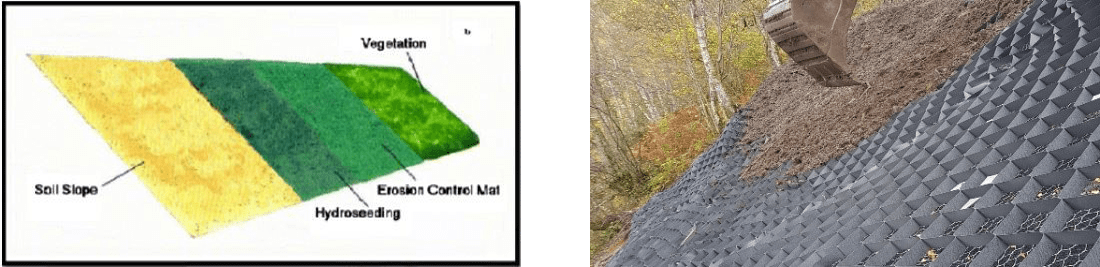
Geotechnical Mitigation Measures  Fig 1: Surface erosion control systems using hydroseeding, erosion control mat, geocells Soil Nailing, SDA (Self-drilling anchors), and ground anchors provide overall/ global stability to the slope. The permanent grouted anchors have been extensively used to provide vertical and lateral support for natural and engineered structures. The grouted end type of anchorage, where the tendon is grouted below the potential slip surface, has been used to stabilize dangerous slopes to a specified safety factor because of its significant technical advantages resulting in substantial cost savings and reduced construction period.

Shotcrete is an all-inclusive term to describe the spraying of concrete or mortar either by a dry-mix or a wet-mix process, which is commonly used to provide surface reinforcement between the blocks of rock and also to reduce weathering and surface scaling.

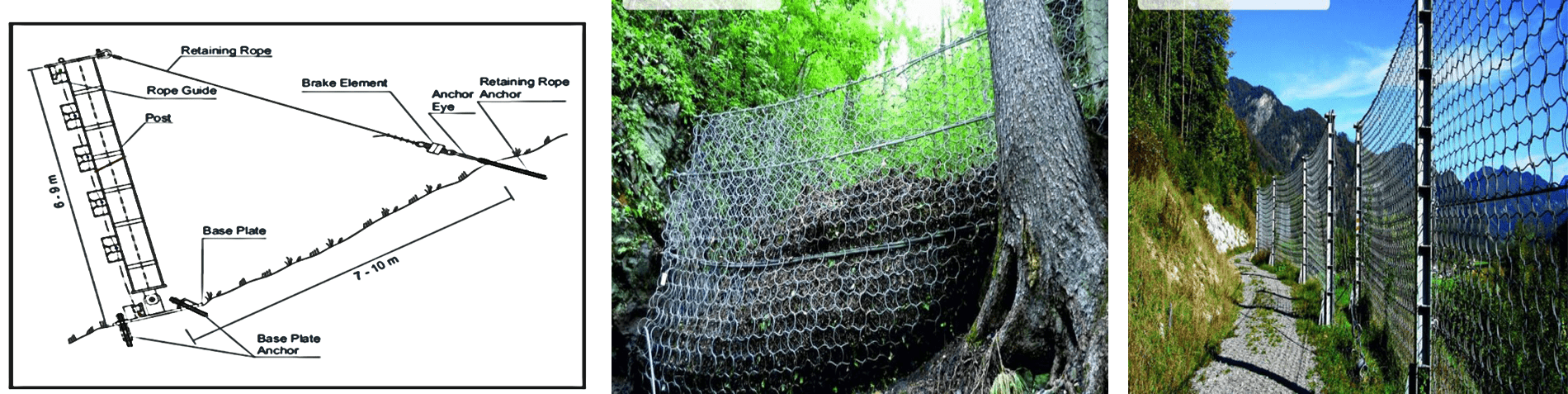
Spar Geo Infra Rockfall barriers Solutions are used to catch/hold or protect roadside and infrastructure. Installing the rockfall barrier system holds better where it is difficult to use other methods, as defined above.
The barrier can resist a higher load compared to the rigid concrete retaining wall. Different ranges of rockfall barriers are available as per kinetic energy that is impacting the barrier (500 kJ-5000kJ). Optimum location and height of the post are decided based on trajectories.


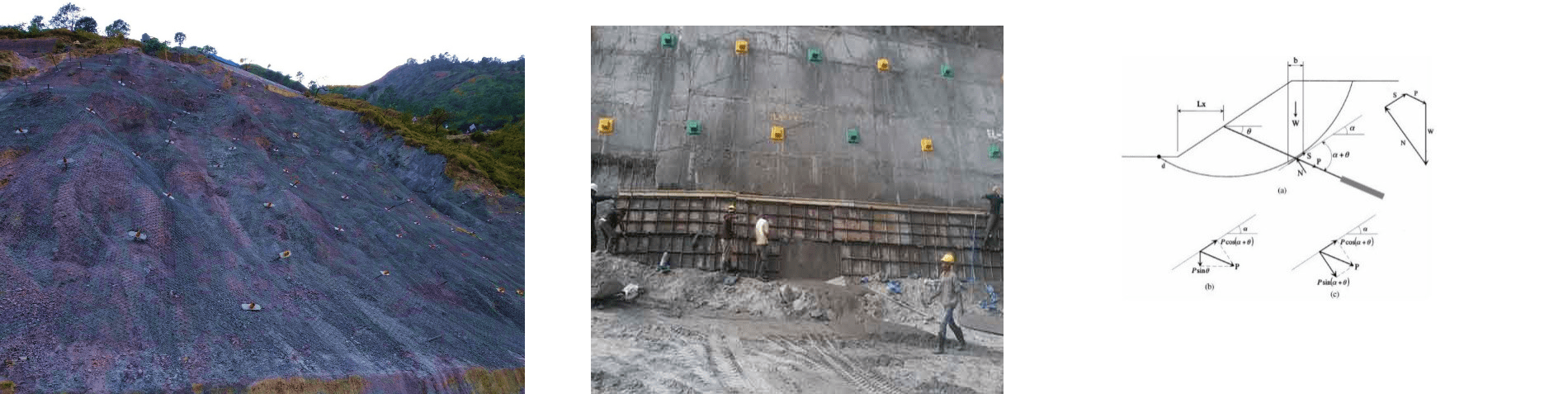
Fig 2: Typical pattern of self-drill anchors with HT wire mesh system (left), Ground anchor and cladding wall system (middle), and Mechanism for cable anchors (right)

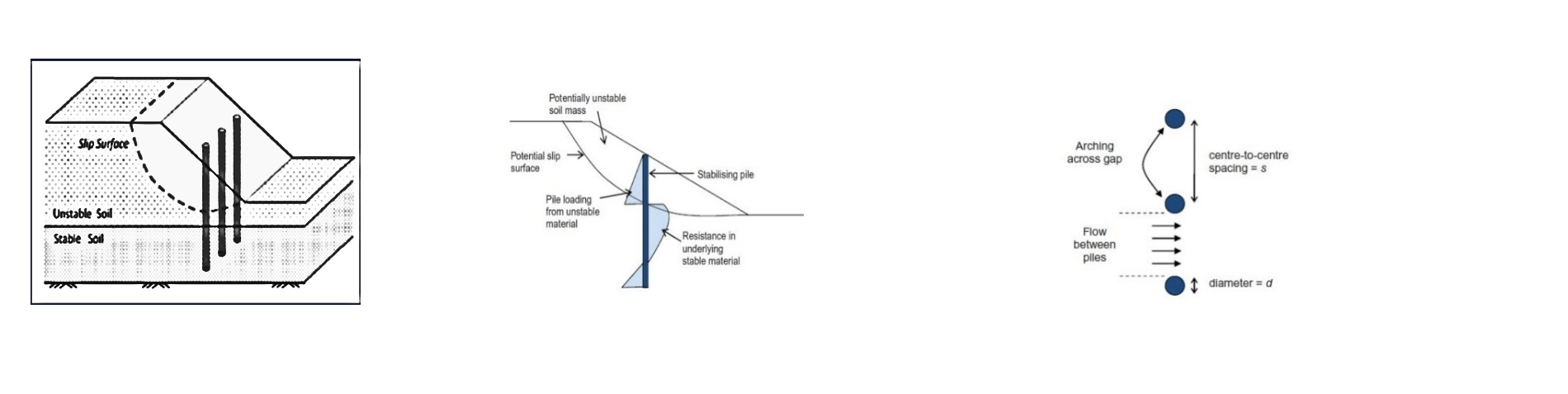
Foundation Engineering Techniques: – Micropiles are small diameter drilled and grouted friction piles comprising steel elements in which each pile is bonded into the bearing soil or rock, usually with cement grout. The bearing stratum is logged during installation drilling to assure that bearing capacity is adequate. Micropiles do not rely on end-bearing capacity, so there is no need to establish the competency of rock beyond bond-depth.

Rockfall Barrier

Fig 3: Flexible rockfall protection barrier with components details

Mechanically stabilized earth embankments are a system for constructing fills at very steep to verticalangles without the use of supporting structures at the face of the fill. The system uses horizontal layers of flexible metal strips within the fill to form a composite earth-metal system with high strength.

HT Wiremesh system provides local stability by restricting the particles in its position. High tensile wiremesh system used for stabilizing slopes by pinning them with a combination of rock or soil anchors, as well as installed as a drape to control erosion. HT wire mesh system, in combination with SDA, proves to be an economical engineered solution as the original slope profile is maintained, appears good from an aesthetic viewpoint due to re-vegetation cover.

Fig 4: Series of pile system to control the movement of unstable mass

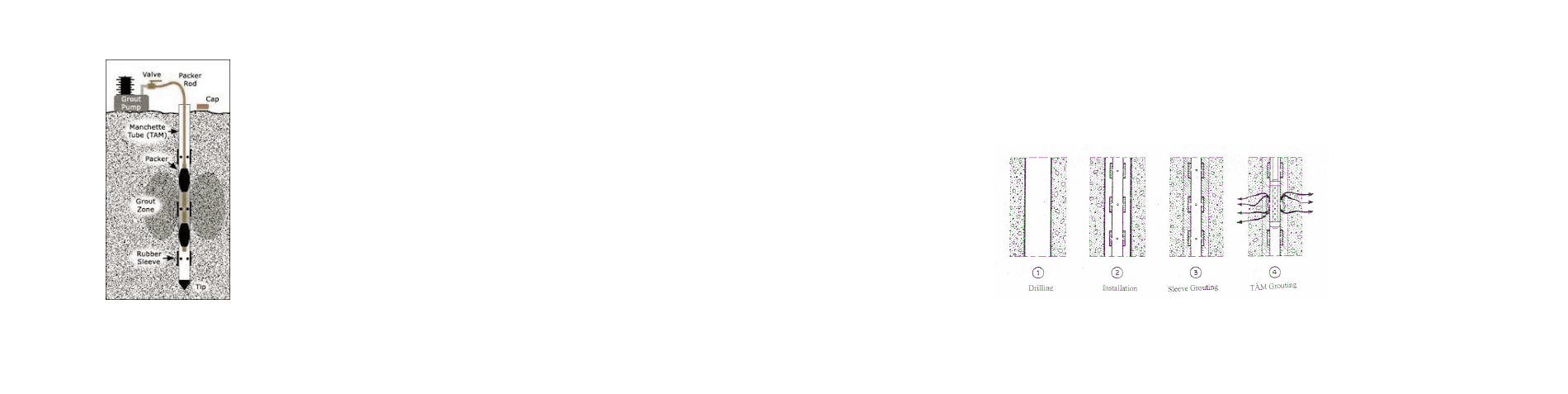
Ground improvement techniques: – It includes (a) Tube-A-Manchette grouting (TAM Grouting), in which holes are drilled around the circumference at equal intervals, and each hole is covered by a rubber sleeve, which allows only one way (outward) movement of the grout. (b) Rock fissure grouting for sealing the fissures in the rock zone (c) Compaction grouting (low mobility grouting) that displaces and densities loose granular soils, reinforces soils, and stabilizes subsurface voids or sinkholes. (d) Jet grouting (high- velocity fluid jets) is a grouting technique that creates in situ geometries of soil Crete, using a grouting monitor attached to the end of a drill stem.

Fig 5: TAM grouting process (left), TAM grouting followed by (1) Drilling at required depth (2) Installation of TAM (3) Sleeve grouting (4) TAM grouting at desired zone

4 Engineering Branches That Relate to Geotechnical Engineering

The world has no shortage of engineers, but it does need people who specialize in certain areas of engineering.

‘Geoprofessions’ refer to the engineering disciplines that relate to the Earth and the environmental services applied to it. Here we are discussing four engineering branches that relate to geotechnical engineering and information about how they can be used:

Environmental Engineering

Environmental engineering is probably the closest in relation to geotechnical engineering. Environmental engineers try to solve problems facing the environment by using the principles of engineering, chemistry and biology.

The tasks of environmental engineers include:
  • Preparing and evaluating investigation reports.
  • Designing water reclamation, air pollution control, and waste conversion projects.
  • Providing technical support for projects.
  • Obtaining and updating plans and procedures and advising corporations and governments about the same.
  • Making sure municipal and industrial facilities comply with environmental regulations.
  • Analysing scientific data and performing quality-control checks.
  • Monitoring the progress of environmental improvement programmes.
  • Conducting studies about hazardous waste management.

As you can see, some of these roles are similar to those of a geotechnical engineer. Environmental engineers also assess whether the sites are safe enough for construction.

They also look at the task from the opposite perspective. The geotechnical engineers want to make sure that no humans are endangered; environmental engineers make sure that wildlife and nature aren’t harmed.

Geological Engineering

Geological engineering is also known as ‘engineering geology’. Geology, as we all know, is the study of pressure and time. More specifically, the effect that these two elements have on rocks. Engineering geologists are concerned with

They apply of the geological sciences to engineering study in order to assure that the company has accounted for the geological factors of the engineering work such as design, location, operation, construction, and maintenance.

Engineering geologists are educated about the recognition and interpretation of natural processes. The understand how these processes impact human-made structures and vice versa. They also mitigate against hazards resulting from adverse natural or human-made conditions.

Their prime objective is to protect life and property against damage caused by various geological conditions such as cyclones, earthquakes, and floods.

Water Resource Engineering

Another field that can offer assistance is water resource engineering, also known as hydrogeology. Like environmental engineering, water resource engineering is a subset of civil engineering.

Water resource engineers design and develop systems and equipment for water resource management facilities and water treatment plants. With this equipment, they can help manage human resources. They also oversee the construction and maintenance of these systems. Water treatment plants, sewage systems, underground wells, and naturally flowing springs are some of the areas where water resource engineers operate.

They are in charge of treating the water and managing aquatic resources. This is why they build tools and equipment to help with their cause. They analyse data from other places in the area to develop the best procedure.

This is a huge task as they must keep the water clean and free of contaminants. Obviously, clean water is a necessity wherever you live. The water resource engineers must also take government regulations and their budget into account when designing these systems. They may work for the government themselves or at separate engineering firms.

They collaborate with geotechnical engineers and advise them on constructing that it does not affect the water. The water resource managers must also bring fresh, clean water to the newly built area.

Climate Engineering

As their name suggests, climate engineering is engineering with respect to the Earth’s climate. Climate engineers attempt to intervene with the Earth’s climate in a bid to prevent it from changing too adversely. The main aim is to reduce global warming. They can do this by either removing carbon dioxide or managing solar radiation.

Carbon dioxide is a greenhouse gas and contributes to the heating up of the Earth because it prevents heat from escaping. By eliminating some of it from the atmosphere, the engineers hope to decrease climate change.

Solar radiation management is when climate engineers design and develop tools so the Earth will absorb less solar radiation. It goes directly to the root of the problem and tries to fix it. They are not the simple solution to climate change and must not be used as the sole method to fix the overall temperature of the Earth. In fact, we should all do our part if we want the Earth to remain a habitable place for the future generations.

These are the fields that relate to geotechnical engineering and what SparGrp is doing. These engineers can use their expertise to help us design and construct buildings in an eco-friendly manner.

Contact us for a discussion about your next Geotechnical Project in India or overseas.

All You Need to Know About Geotechnical Engineering

Here are answers to ten of the most frequently asked and trending questions relating to geotechnical services picked by our technical staff.

What does geotechnical engineering mean?

Simply put, geotechnical engineering is a branch of civil engineering that deals with the engineering behaviour of Earth materials. It is the practical application of geology. It uses principles of soil and rock mechanics to investigate various geological factors and properties mainly to assess if the location and land mass are fit for construction work.

How does it differ from geoengineering?

Geotechnical engineering is a subset or branch of geoengineering.:

geotechnical-engineeringWhat is a geotechnical engineer’s role?
Geotechnical engineering involves studying how soils behave when they are influenced by loading forces. It also involves examining how soil interacts with water. The engineer uses this knowledge to design foundations and buildings. They select the optimum sites for highways, railways, and landfill disposals. Geotechnical engineers then lay out the blueprints for future projects and make sure the soil is stable enough to support building construction.

Where is geotechnical engineering used?

Geotechnical engineering is important in civil engineering, military, mining, and petroleum. Engineering disciplines concerned with construction occurring on the surface or within the ground also use geotechnical engineering.

What is a geotechnical investigation?

Geotechnical investigation (also known as a geotechnical survey) involves assessing the physical properties of a site to determine if and how you can use it safely. It is required to be performed before land can be developed or redeveloped. It is also to be done after an earthquake or after cracks emerge. The main purpose is to make sure the land and area are safe to build on.

What is geotechnical instrumentation?

Geotechnical instrumentation is in reference to the instruments or equipment that engineers use for their projects. These tools include soil testers, drills, hammers, hydrometers, pumps, weighing scales, magnifying lenses, and excavation tools.

What is g-force in geotechnical terms?

G-force is the force that gravity exerts on a particular extraterrestrial body. It can also refer to the force of acceleration anywhere. Bodies with larger mass produce greater gravitational fields. Engineers must definitely take g-force into account while designing their structures.What’s a geotechnical report?

The geotechnical report is used to communicate the conditions of the site along with design and construction recommendations. The report may also contain recommendations for the site design, building design, and construction personnel.

What is the Q-system?

The Q-system was developed by Barton, Lien, and Lund to identify rock mass classification. The system expresses the quality of rock mass. The number can range from 0.001 (exceptionally poor) to 1000 (exceptionally good). It is an important factor in deciding whether to build on top of an area or not.

What is geotechnical drilling?

Geotechnical drilling is performed as part of the construction process. It is mainly done for buildings and oil rigs. It is done to analyse whether the site is appropriate for construction. The contractors may drill to collect rock and soil samples or to look at how stable the soil is. It can also be conducted in the search for oils, minerals, gas, or any other valuable resources, or simply for research and to learn about the Earth’s history.

The Millennium Tower – Importance of Geotechnical Engineering

The Case of Millennium Tower

The 58-story Millennium Tower is the tallest residential building in San Francisco. The US$350 million project was designed by Handel Architects and constructed by Webcor Builders. The 645 feet skyscraper constructed between 2005 to 2008 was found to be sinking and tilting in 2016. Subsequently, the City of San Francisco filed suit against the tower’s developer, claiming that the developers withheld information on the sinking problems from potential apartment buyers.

Who’s to blame?

The tenants and residents of the Millennium Towers are blaming the developers and the developers are blaming the Transbay Joint Powers Authority for excavating a tunnel near the foundation of the tower.

A NBC Bay Area News investigation showed that the leaning and sinking Millennium Tower’s troubles may have been avoided had the city building officials heeded experts’ warnings.

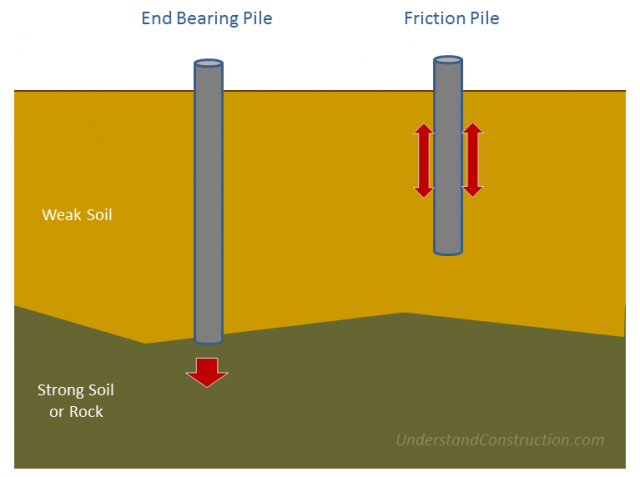
Most experts say the poor foundation of the tower resulted in the sinking and tilting of the tower. The foundation of the tower is concrete slab built on concrete friction piling into the mud fill and sand. This foundation can also be called as floating pile foundation which is not usually recommended for large constructions like this.

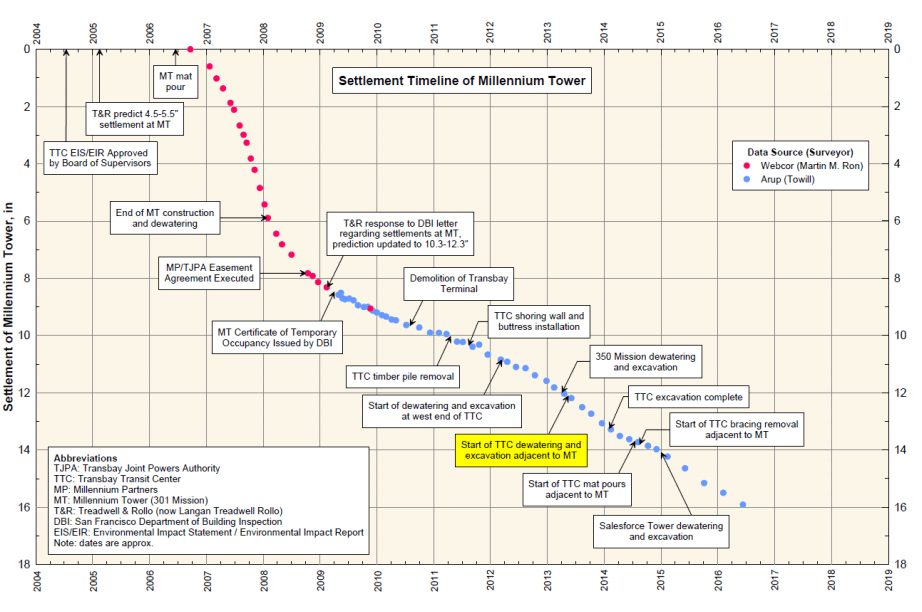
millenium-settlement-image

Mikeyouse comments on the image above-

“Friction piles are typically fine, even in earthquake-prone areas. The Millennium Tower’s biggest issue is that it’s a reinforced concrete structure instead of a steel structure. Where newer steel buildings have pressures of ~2000lbs – 3000lbs per square foot, the Millennium Tower is more like 15000 lbs per square foot. The engineers knew this would be problematic and hard designed measures to prepare up to 6 inches of sinkage over time. It was designed to sink 5 inches over its lifetime. It sunk 8 inches before it was opened. It sunk a further 8 inches in the past six years.”

geotechnical-piles

So what is the role of the Geotechnical Engineer in projects like these?

Geotechnical engineering is the study of the behaviour of soil under the influence of loading forces and soil-water interactions. The geotechnical engineer is answerable for the safety of his team and the public during and after construction. He investigates the site for various risk factors like natural disasters that the site is prone to viz. earthquake, landslides, rock falls, etc. His investigation includes assessment of soil, rock and bedrock properties, etc. on the construction site. Apart from this, the geotechnical engineer is also responsible for designing excavation, landfills and stabilising natural slopes to ensure public safety.

The skyscraper is built in the South of the Market city, San Francisco. A geotechnical engineer is aware that the large structure like Millennium Tower requires a strong foundation that hits the bedrock. But in this case, the builders opted for 60 and 90 feet friction piles instead of end-bearing piles that take 200 feet to reach the rock.

mellenium-geotechnical-piles

Would a peer review have helped?

The Millennium tower has now settled 16 inches and tilted 2 inches to the north-west. This could have been avoided if they had taken action at initial stages. The developers definitely had a geotechnical engineer in their construction team but not they did not employ the peer reviewer.  A geotechnical engineer can accurately calculate the anticipated movement of the structure in advance thus prevent further damage.

Whatever the truth, the developers could have avoided this sinkage if the builders had hired an efficient peer geotechnical reviewer and used end-bearing piles instead of friction piles.